
Two electricians walk through the same 1920s Petworth rowhouse. One quotes a new breaker panel. The other quotes a heavy up and mentions scheduling the utility. The estimates arrive thousands of dollars apart, yet both seem to describe the same job.
They describe two different jobs, and the gap says a lot about how older homes across Washington, suburban Maryland and Northern Virginia are catching up with modern living.
Local outfits like Paradise Construction LLC, which handles panel upgrades, EV charger installs and whole home rewiring around the region, use both terms, and the easiest way to see where one ends and the other begins is to follow the power backward, starting at the breaker you flip in the basement and finishing at the wire that crosses the alley.
Where a Panel Swap Draws Its Line
A panel swap replaces the box on the wall and everything inside it. New bus bars, new breakers, a new main breaker and a clean enclosure. What it does not change is the size of the electrical service feeding the house. If the home had 100 amps coming in before, it has 100 amps coming in after.
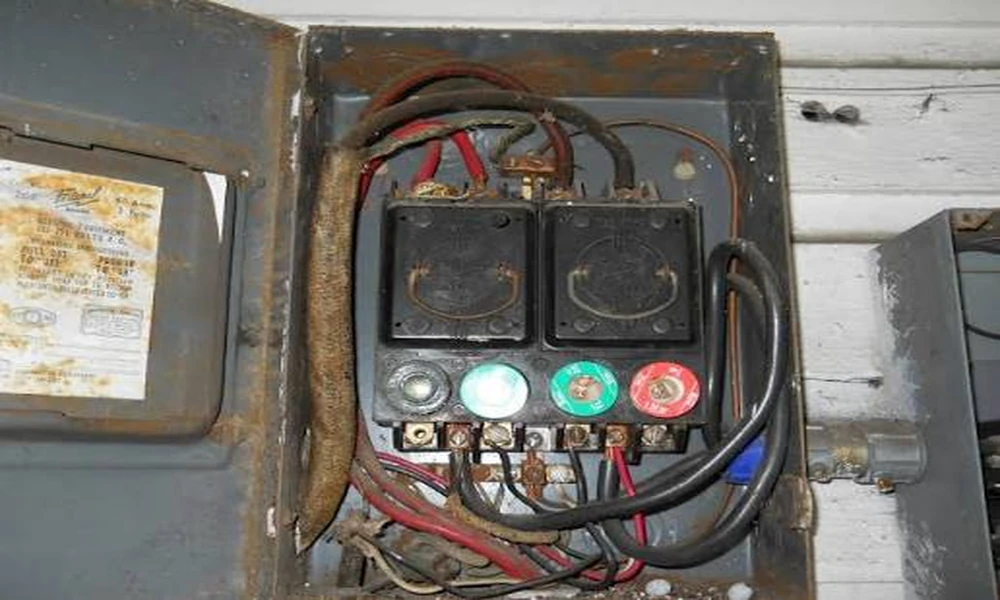
That still solves real problems, because plenty of DMV homes carry panels electricians would rather not leave in place. Federal Pacific panels from the 1960s and 1970s have a long record of breakers that fail to trip. Zinsco and Sylvania panels are known for breakers that loosen and arc against the bus. Pushmatic units have stiff, aging breakers and often no single main shutoff. Some older homes still hide a fuse box in the cellar.
A swap also fixes the clutter that builds up over decades, like doubled wires under one screw, rust from a damp basement or a panel an inspector flagged before closing. The house may have plenty of capacity in those cases. It simply needs safer equipment to manage it.
The service entrance cable, the meter base and the mast on the outside wall stay where they are. A permit and an inspection are still required, and the utility may need to pull the meter briefly, but nobody is changing what the house is allowed to draw.
The Heavy Up Keeps Going Past the Wall
Heavy up is a word you mostly hear around the Beltway. Elsewhere it goes by service upgrade or service change. It raises the rating of the entire service, most often from 100 or 150 amps to 200, and occasionally to 320 or 400 for larger homes with big electric loads.
Because the extra current has to travel all the way from the utility, a heavy up usually rebuilds a chain of equipment rather than one box.
- Heavier service entrance conductors running from the connection point to the panel
- A meter base rated for the new amperage
- A new mast and weatherhead for overhead service, or work on the underground lateral where the line arrives below grade
- An updated grounding and bonding system, including ground rods and the bond to metal water piping
- A main panel with a breaker sized for the new service
Then comes the part that turns a two day job into a two or three week project. Pepco, BGE or Dominion has to disconnect the service, the electrician installs the new equipment, the local inspector signs off, and the utility reconnects and sometimes upsizes its own drop. On cutover day the house is usually without power for several hours.
Reading the Load Before Picking a Side
Choosing honestly starts with a load calculation under Article 220 of the National Electrical Code. It totals lighting, outlets, appliances and heating and cooling, then estimates what the house realistically pulls at once.
Plenty of rowhouses pass that test on 100 amps today and fail it once the family adds one or two big loads. A cold climate heat pump replacing an oil or gas boiler can need a large dedicated circuit plus electric backup heat. An induction range typically wants 40 or 50 amps. A Level 2 EV charger usually runs on a 40 or 50 amp circuit and may draw for hours in the evening when the rest of the house is busy. Add a basement apartment with its own kitchen and the arithmetic stops working.
If the calculation lands close to the service rating with everything you plan to add over the next decade, a heavy up is the direct answer. If it lands comfortably below and the only issue is a bad panel, a swap is enough.
A Middle Path Some Homes Can Take
Homes in between may not need a full heavy up. Recent code editions recognize energy management systems that shed or delay certain loads before the service is overloaded. In practice that might be an EV charger that slows down while the dryer and range are running, or a smart panel that throttles a water heater during dinner.
For a house at 150 amps where the only major addition is a car, that can save the cost and the utility wait. It does nothing for a defective panel, though, and it works best after real load math.
Old Brick, Narrow Alleys and Historic Review
The DMV adds its own complications. Many DC rowhouses take power from an overhead drop in the rear alley, while others have meters bolted to a brick front or tucked into a basement meter room reached from the street. In the District, permits run through the Department of Buildings, and exterior changes visible from the street in a historic district can trigger review by the Historic Preservation Review Board. Georgetown answers to its own federal review process. Suburban counties in Maryland and Virginia each run their own permits and inspections, so timelines vary even for identical work.
One more point gets missed. A heavy up improves the path from the street to the panel and stops there. Cloth insulated wiring, ungrounded two prong outlets and old knob and tube runs in the walls are left exactly as they were. If you are fuzzy on how those pieces connect, the ESFI overview of a home electrical system is a short, plain explanation worth reading before you meet with anyone.
The Question Behind Both Quotes
When two estimates look this different, the useful question is what the house will be asked to carry ten years from now. If you are keeping a gas furnace, have no car to charge and simply inherited a risky panel, the smaller job makes sense. If a heat pump, an electric kitchen or a charger is anywhere on the horizon, paying for a panel swap now and a heavy up later means buying a new panel twice.
Either way, ask each contractor to write down the amperage the house will have afterward, whether the meter base and service conductors are included, who handles the utility scheduling and permit, and what the load calculation actually showed. Once those answers sit side by side, the two quotes stop looking like rivals and start looking like what they are, two different answers to two different problems.