
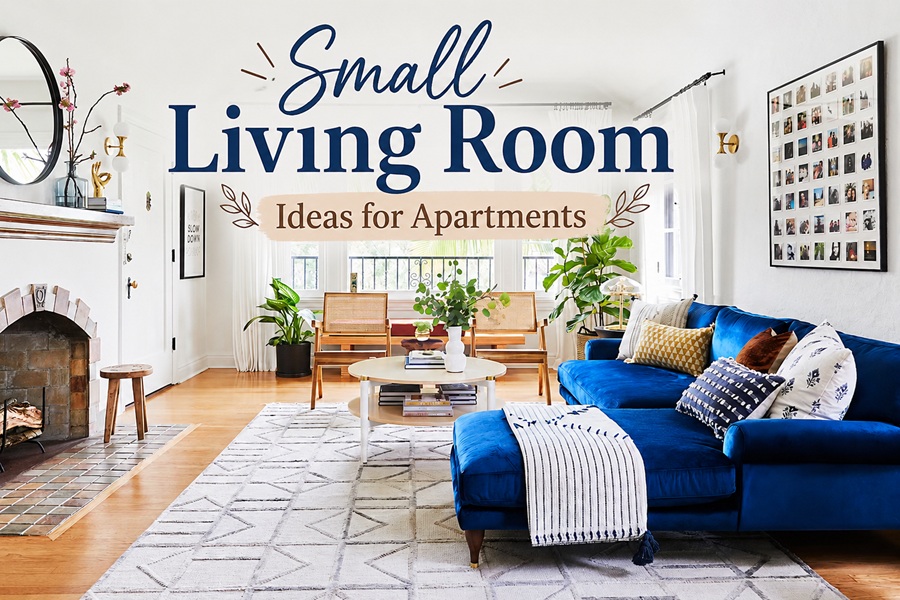
A small living room is not a design problem waiting to be solved. It is a space with its own set of possibilities — and when those possibilities are understood properly, the result is often a room that feels more considered, more personal, and more liveable than a large room that has simply been filled with furniture.
Apartment living in particular has pushed small living room design into its own discipline. City apartments, period conversions, and compact modern builds all present the same fundamental challenge: how do you create a living room that functions well, feels warm and welcoming, and does not look like a furniture showroom that ran out of space?
This guide covers small living room design from the ground up — layout principles, furniture choices, colour and lighting, and the specific techniques that turn a tight space into somewhere you actually want to spend time.
Understanding the Small Living Room Before You Decorate
The single most common mistake in small living room design is treating it like a large room with less space. The instinct to scale everything down — smaller sofa, smaller coffee table, smaller rug — often produces a room that feels sparse and disconnected rather than compact and curated.
Small living rooms benefit from a completely different set of principles than large ones. Rather than scaling down, the approach should focus on proportion, function, and deliberate use of every surface and wall. The goal is not to make the room look bigger. The goal is to make it feel right.
Before any furniture is chosen or paint colour is selected, take the time to understand the room properly. Note where the natural light enters and at what time of day. Identify the room’s fixed points — doors, windows, radiators, electrical sockets — that will determine where furniture can and cannot go. Measure the room accurately, including ceiling height, which is often overlooked but plays a significant role in how a space feels.
Small Living Room Design: The Principles That Actually Work
Work With the Room’s Architecture, Not Against It
In period apartments and converted buildings especially, the architecture of the room itself is one of the most valuable design assets available. Cornicing, ceiling roses, picture rails, original fireplaces, and sash windows all carry a sense of character and history that no amount of furniture can replicate. Working with these features rather than covering them or ignoring them is the foundation of good small living room design.
A fireplace, even a non-functional one, provides a natural focal point that anchors the entire room. Arranging furniture around it gives the layout a logic that feels instinctive. In a room without a fireplace or other architectural focal point, a well-chosen piece of artwork, a carefully styled bookshelf, or a console table with a mirror above it can serve the same purpose.
Keep the Floor Plan Simple and Clear
In a small room, clear floor space reads as breathing room. Every item of furniture that sits on the floor competes for visual space as much as physical space. A room with fewer, better-chosen pieces feels larger than one where every corner has been filled.
The most effective floor plans for small living rooms establish a single clear seating arrangement and resist the urge to add supplementary seating, side tables, and floor lamps that gradually crowd the layout. Everything in the room should justify its presence.
Use Vertical Space Deliberately
Small rooms often have more vertical space than they use. Shelving taken to ceiling height draws the eye upward and makes the ceiling feel further away. Tall bookcases, high-hung artwork, and curtains that run from ceiling to floor all contribute to a sense of vertical spaciousness that counteracts the limitations of floor area.
Curtains in particular are a simple and effective tool. Hanging them as close to the ceiling as possible and allowing them to fall to the floor — even if the window itself sits several inches below — creates the visual impression of much taller walls than are actually present.
Small Living Room Ideas for Apartments: Room by Room Approaches
The Studio or Open-Plan Apartment Living Area
In a studio apartment or open-plan space where the living area shares a room with the kitchen or bedroom, the challenge is definition as much as size. Without walls to separate functions, furniture and rugs become the primary tools for creating distinct zones.
A rug placed under the seating arrangement defines the living area clearly and separates it visually from the rest of the space. The rug should be large enough to sit under the front legs of all seating, not just the coffee table — a common mistake that makes the furniture look like it is floating rather than anchored.
A sofa facing away from the kitchen or sleeping area reinforces the separation of functions. Even in a very small space, the direction a sofa faces communicates what part of the room it belongs to.
The Narrow Living Room
Narrow rooms present a specific challenge because the proportions work against conventional furniture layouts. A sofa placed on the long wall leaves the room feeling like a corridor. A sofa placed across the narrow end blocks natural movement through the space.
The most effective approach in a narrow living room is to embrace the depth of the room rather than fight it. Place seating facing each other across the shorter dimension, with a small table between them. This creates an intimate, conversation-friendly arrangement that works with the room’s proportions rather than against them. Mirrors on the long wall open up the narrowness visually without altering a single dimension of the room.
The Square Living Room
A square room with equal or near-equal dimensions is actually one of the more straightforward spaces to furnish, though it can look static if the arrangement is too symmetrical. A sofa and two chairs arranged in an L-shape gives the room a sense of movement that a perfectly symmetrical layout lacks. A diagonal placement of a rug can introduce dynamism without crowding the space.
Furniture Ideas for Small Living Rooms
Choosing furniture for a small living room is less about finding small furniture and more about finding furniture that earns its place. Every piece should serve at least one function clearly and ideally two.
The Sofa
The sofa is almost always the largest single item in a living room and therefore the decision that most affects how the room feels. In a small living room, a two-seat or compact three-seat sofa with a tight back and relatively slender arms takes up significantly less visual and physical space than a deep, overstuffed model of equivalent length.
Sofas with legs rather than a solid base are almost always preferable in small rooms. The visible floor beneath a sofa makes the room feel more open. A sofa that sits flush to the floor closes off the lower third of the room and makes everything feel heavier.
In terms of style, a sofa with clean lines and a relatively simple profile works better in a compact space than one with elaborate detailing or very deep cushions. For a Georgian or period-influenced interior, a camelback sofa, a Chesterfield in a compact size, or a tuxedo sofa in a solid fabric all bring character without bulk.
Multifunctional Furniture
In a small apartment living room, multifunctional furniture is one of the most practical tools available.
An ottoman that serves as both a coffee table and additional seating replaces two separate items with one. A storage ottoman with a tray on top adds a hard surface for drinks and remotes while keeping blankets, cushions, or other items out of sight. Nesting tables that can be pulled out when needed and tucked away when not occupy a fraction of the floor space of a standard coffee table and side table combination.
A console table behind the sofa serves as a surface for lamps, books, and decorative objects without taking any floor space from the main seating area. In a room where the sofa floats away from the wall, a narrow console behind it also anchors the back of the seating arrangement visually.
Shelving with a built-in desk, storage benches, and side tables with drawers all follow the same principle: every item that stores something reduces the need for a separate storage piece elsewhere in the room.
Built-In Storage and Shelving
In any room that allows for it, built-in shelving around a fireplace breast or along a full wall is one of the most efficient uses of space available. Built-ins sit flush to the wall, use the full height of the room, and provide storage without intruding on the floor plan. In a period apartment, alcove shelving flanking a chimney breast is both historically appropriate and practically excellent — drawers and cupboards in the lower section keep clutter out of sight, while open shelving above displays books and objects.
Coffee Tables and Side Tables
A glass-topped coffee table is one of the oldest small room tricks, and it still works. The transparency of glass means the eye passes through it to the floor, making it far less visually dominant than a solid wood or stone surface. Acrylic and lucite tables achieve the same effect.
For side tables, small stools or C-shaped tables that slide under the sofa arm when not in use are more practical in a small room than conventional side tables that occupy permanent floor space.
Small Warm and Cosy Living Room Ideas
A small living room has one significant advantage over a large one: it is inherently easier to make feel cosy. The sense of enclosure that can feel like a limitation in terms of space is actually an asset when it comes to atmosphere. A small room with the right lighting, textiles, and colour palette can feel like the most welcoming space in a home.
Lighting for Warmth and Depth
Overhead lighting is the enemy of cosiness. A single ceiling light illuminates a room evenly and flatly, which may be practical but produces none of the depth and warmth that makes a space feel inviting.
Layered lighting — combining floor lamps, table lamps, and wall sconces at varying heights — creates pools of light that make a room feel rich and dimensional. In a small living room, two or three well-placed lamps do far more for atmosphere than a single overhead fitting. Use bulbs with a warm colour temperature in the 2700K to 3000K range, which produces a golden tone that is flattering to both the room and the people in it.
Candles, whether real or high-quality battery-operated, add the kind of flickering warmth that no electric light entirely replicates. A collection of candles on a fireplace mantel or coffee tray is one of the simplest and most effective cosy touches available.
Textiles and Layering
Nothing makes a small living room feel colder and more unwelcoming than hard, flat surfaces with no softness. Textiles — rugs, cushions, throws, curtains — are the primary tools for adding warmth and cosiness, and in a small room they are all the more powerful because they are close to you wherever you sit.
A large rug anchors the seating arrangement and adds a layer of warmth underfoot that bare boards or tiles cannot match. Wool, cotton, and natural fibre rugs bring texture as well as warmth. A pattern on the rug adds interest without requiring any additional decoration.
Cushions on a sofa should be plentiful enough to be useful but not so numerous that they have to be removed before sitting down. Three to five cushions in complementary fabrics and sizes — a mix of solid colours and a pattern or two — is a comfortable balance for a compact sofa.
A throw draped over the sofa arm is one of the most universally recognised cosy touches and also one of the most practical. Cashmere, merino, and chunky knit throws all work well. Folding it over the arm rather than draping it loosely keeps the sofa looking neat while the throw remains accessible.
Heavy curtains in a warm fabric — velvet, linen, or a quality cotton weave — do more for the warmth of a room than almost any other single element. They absorb sound, add colour and texture, and make a room feel enclosed in the best possible sense of the word.
Warm Colour Palettes
Colour choice in a small living room involves a genuine tension between the conventional advice to keep small rooms light and the reality that warm, deeper colours often make small rooms feel more intentional and welcoming.
The advice to paint small rooms white or very pale exists because pale walls reflect light and avoid the visual weight of darker tones. It is practical advice but not universal. A small living room painted in a deep terracotta, a warm ochre, a dusty rose, or a rich olive green can feel far more characterful and enveloping than the same room in white.
The key is to choose warm tones rather than cool ones. Cool greens, blues, and greys can make a small room feel clinical. Warm versions of the same colours — sage, teal with yellow undertones, warm charcoal — work considerably better. Painting the ceiling in the same colour as the walls, or even a shade slightly darker, removes the visual break at the top of the room and creates an enveloping effect that feels deliberately intimate rather than simply small.
For a Georgian-influenced interior, period-appropriate colour families include Wedgwood blues, terracotta and ochre tones, deep olive and sage greens, and warm off-whites with yellow undertones. These colours have historical accuracy alongside their practical warmth.
Natural Materials and Organic Texture
Wood, stone, wicker, linen, and wool all introduce a tactile quality that makes a room feel grounded and lived-in. In a small living room, the variety of textures is often more important than the variety of colours. A room in three tones with five different textures will feel richer than a room in five colours with flat, uniform surfaces.
A wooden coffee table or side table, a wicker storage basket, a stone lamp base, linen cushion covers, and a wool rug together create a layered material palette that adds depth without visual noise. Natural materials also age well, developing a patina over time that a room furnished entirely in synthetic materials never achieves.
Small Living Room Design: Finishing Touches
Mirrors
A well-placed mirror is the closest thing to a universal solution for small rooms. A large mirror on the wall opposite a window reflects natural light back into the room, making it feel brighter and more spacious. An antique mirror with a mottled glass surface adds reflection without the harsh clarity of a modern mirror, which can sometimes feel more like a window into another room than a decorative element.
In a period apartment, a mirror above the fireplace in a proportionate frame is a classic placement that never reads as a small-room trick — it simply looks right.
Artwork and Decoration
In a small room, a single large piece of artwork makes a bolder and more confident statement than a collection of smaller pieces. A large painting or print hung at eye level on the main wall gives the room a clear focal point and avoids the slightly frantic quality of a salon-style gallery wall in a tight space.
For shelving and mantelpieces, the same principle applies. A few well-chosen objects with space between them look deliberate. Many small objects crowded together look cluttered, and clutter is the thing a small room can least afford.
Plants
A single large plant in a good-quality pot is preferable in a small living room to several small ones. A fiddle leaf fig, a large monstera, or an olive tree in a terracotta pot adds life and warmth to a room without multiplying surfaces and containers. Plants introduce colour, organic form, and a sense of the outdoors that makes enclosed spaces feel less so.
The Small Living Room as a Design Opportunity
The rooms that tend to feel most thoughtfully designed are often not the largest ones. A large room can absorb decorating mistakes, mismatched furniture, and poor lighting without looking wrong. A small room cannot. Every decision counts, and that constraint is ultimately what produces the most considered results.
A small apartment living room, approached with clarity about what it needs to do and what it should feel like, has the potential to be the most characterful room in a home. The right furniture earns its place and earns it visibly. The right colour wraps the room in intention. The right lighting turns a functional space into somewhere genuinely good to be.
That is not a limitation. That is a design brief.