
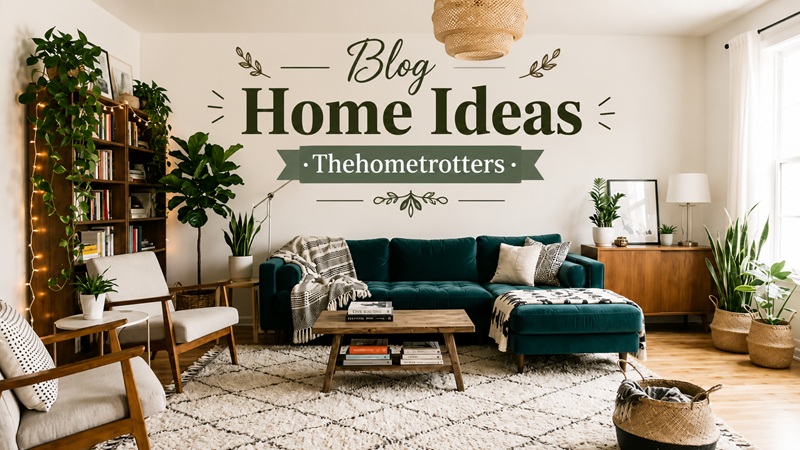
The search for home ideas is one of the most consistently active areas of online research for homeowners, and for good reason. A home is never truly finished — it evolves with the people who live in it, with changing needs, with the accumulation of objects and memories, and with the gradual understanding of what a space needs to feel right. The best blog home ideas are not about chasing trends but about building a genuine understanding of what makes a home work — and then applying that understanding room by room, decision by decision.
This guide brings together the most practical and most enduring home ideas across every room and every stage of homeownership, from the foundational decisions that shape a renovation to the small finishing touches that give a room its character. Whether you are undertaking a full renovation, refreshing a single room, or simply looking for ideas to make your existing home feel more like itself, the principles here apply.
What Are the Best Living Room Home Ideas?
The living room is the room that most defines the character of a home and the one that most homeowners find hardest to get right. It needs to serve multiple functions — sitting, conversation, relaxation, occasional entertaining — in a single space, and the furniture and decoration choices that work for one function often compromise another.
The most consistent advice from interior designers and home bloggers focuses on three foundational decisions: the furniture arrangement, the lighting, and the definition of a focal point.
Furniture arrangement is where most living rooms go wrong before any decoration decisions are made. The instinct to push furniture against the walls leaves a large empty space in the centre of the room that reads as wasted rather than generous, and a seating arrangement too spread out for comfortable conversation. Floating the sofa and chairs — pulling them away from the walls and arranging them around a central point — creates an intimate, purposeful seating zone that works for daily life rather than simply filling the room.
Lighting in a living room should never rely on a single overhead source. Layered lighting — a dimmed ambient source at ceiling level, a floor lamp beside the reading chair, a table lamp on a side table, candles or decorative lighting on the mantelpiece — creates the depth and atmosphere that makes a living room feel genuinely designed rather than merely furnished. Every bulb should be at 2700K, the warm tone that flatters natural materials and creates an inviting evening atmosphere.
A focal point anchors the room and gives the eye somewhere to travel. A fireplace is the most natural focal point in any living room that has one — even a non-functional fireplace provides visual structure that the furniture arrangement can organise around. Where no fireplace exists, a large piece of artwork, a well-styled bookshelf, or a console table with a mirror above it serves the same organising purpose.
What Are the Most Useful Kitchen Home Ideas?
The kitchen is where the most significant home improvement investments typically deliver the highest return — both in terms of daily quality of life and in terms of property value. The best kitchen home ideas, however, are not necessarily the most expensive ones.
Hardware replacement is one of the highest-return, lowest-cost kitchen improvements available. Replacing standard chrome or brushed nickel cabinet handles and drawer pulls with aged brass, black iron, or antique bronze equivalents costs relatively little and immediately shifts the material quality and style of the kitchen. A set of handles from a quality architectural hardware supplier transforms cabinets that might otherwise require replacement into something that looks deliberately chosen.
A pendant light above the kitchen island or dining table is one of the single most impactful kitchen additions available. A statement pendant — whether a sculptural ceramic shade, a cluster of glass globes, a wicker or rattan form, or a simple industrial-style fitting in a quality material — changes the character of a kitchen more completely than almost any other single addition of equivalent cost. The light fitting is the jewellery of the kitchen, and changing it updates the room without touching any of its structure.
Open shelving in place of upper cabinets on one wall of the kitchen creates both a practical storage solution and a display opportunity. The objects on open shelving — ceramic storage jars, a stack of plates, a row of cookbooks, a cluster of glasses — become part of the decoration of the room. The key is editing: open shelving that is carefully curated reads as designed; open shelving that accumulates every miscellaneous item reads as cluttered. Committing to the discipline of keeping those shelves considered is the price of the aesthetic.
Quartzite, marble, or stone-look countertops make one of the most visible improvements in a kitchen refresh short of full cabinet replacement. Where full replacement is not in budget, replacing only the countertops and splashback — while repainting or refacing existing cabinets — produces a result that reads as substantially more considered than the sum of its individual changes.
What Are the Best Bedroom Home Ideas?
The bedroom is the most personal room in the home and the one that most homeowners invest least in, relative to its importance to daily wellbeing. A bedroom that functions well as a sleep environment and feels genuinely restful has a measurable effect on the quality of daily life that no amount of living room improvement can replicate.
The bed itself — specifically the headboard and the quality of the bedding — is the single highest-impact starting point for any bedroom improvement. An upholstered headboard in linen, velvet, or bouclé immediately transforms a bed from a functional piece of furniture into the visual centrepiece of the room. It does not need to be expensive: a well-chosen upholstered headboard from a mid-range supplier in a quality natural fabric reads as considerably more considered than a bare divan or a basic timber frame.
Bedding quality is the bedroom investment with the most immediate and most daily return. High thread-count cotton, linen, or a linen-cotton blend in a warm neutral tone — white, cream, pale sand, warm grey — with a well-chosen throw and two or three carefully selected cushions creates the layered, considered bed that every bedroom aspirational image aspires to. The discipline here is in the editing: too many decorative cushions require too much effort to manage daily, and a bed that looks like a staging exercise feels less comfortable to actually use than one that is thoughtfully but practically dressed.
Eliminating overhead-only lighting in the bedroom is one of the most immediately transformative changes available. Replacing a single ceiling light with bedside lamps — at either side of the bed, at a height that provides useful reading light without illuminating the whole room — changes the atmosphere of the space entirely. Warm-toned bedside lighting on a dimmer creates the kind of transition from the alertness of the day to the restfulness that supports good sleep.
Built-in or well-chosen freestanding storage that eliminates visible clutter is the bedroom improvement that most homeowners delay and most consistently wish they had addressed sooner. A bedroom with adequate, well-organised storage is a calmer, more restful environment than one where objects accumulate on surfaces and floors. Getting the storage right early is always more cost-effective than addressing it as a retrofit.
What Home Ideas Work Best for Small Spaces?
Small spaces are the context in which home ideas and design decisions have the most consequence. A furniture choice or a colour decision that is merely suboptimal in a large room can make a small room genuinely uncomfortable.
The most useful home ideas for small spaces prioritise vertical space and multifunctional furniture above all else. Shelving taken to ceiling height captures storage space that would otherwise be unused and draws the eye upward, making the ceiling feel further away and the room feel taller. A bed with built-in drawer storage eliminates the need for a separate chest of drawers. A sofa with storage in its base removes the need for a separate storage ottoman. A console table behind the sofa provides a surface for lamps and objects without consuming floor space.
Colour in small spaces is more nuanced than the conventional advice — keep it white — suggests. A small room in a deep, warm, immersive colour (forest green, warm navy, rich terracotta) feels intimate and deliberate rather than simply small. The colour-drenching technique — painting walls, ceiling, and all woodwork in the same colour or closely related tones — is one of the most effective tools for making a small room feel considered and complete rather than restricted.
Mirror placement in small rooms is one of the highest-return, lowest-cost home improvements available. A large mirror on the wall opposite a window reflects natural light back into the room, effectively doubling the perceived light level and adding significant perceived depth. Mirrored wardrobe doors, mirrored splashbacks in kitchens, and mirrored panels in alcoves all achieve the same effect at varying scales and costs.
Keeping floors as clear as possible is the most consistently effective small-space principle. Every item of furniture that sits on the floor competes for the limited available space visually as much as physically. Wall-mounted shelving, built-in storage, under-bed drawers, and furniture with legs rather than solid bases all preserve floor visibility and make a small room feel more generous than its square footage suggests.
What Are the Best Home Ideas for Period Properties?
Period properties — Georgian townhouses, Victorian terraces, Edwardian semis, and older rural buildings — present a specific set of opportunities and challenges that general home ideas do not fully address. The existing architecture of these buildings is simultaneously their greatest asset and the framework within which every decoration decision must be made.
The most valuable period property home idea is one that costs nothing: stop concealing the architecture. Cornicing, ceiling roses, picture rails, sash windows, panelled doors, original fireplaces, and exposed timber floors are assets that no amount of contemporary decoration can replicate. Every renovation decision in a period property should begin with the question of what the existing architecture requires, rather than what a current trend suggests.
Original floors in period properties are among the most valuable elements the building contains, and they are among the most frequently covered or replaced in renovation projects. Original timber boards, stone flags, quarry tile, and Victorian encaustic tile floors, restored to good condition, add a quality and character to a period home that no engineered replacement can match. Where original floors survive in recoverable condition, restoring them is almost always the correct decision — financially, aesthetically, and historically.
The fireplace is the focal point of every room in a period building that has one, and many period properties contain multiple fireplaces that have been boarded up, replaced, or otherwise compromised over the decades. Reinstating an original fireplace — or sourcing a period-appropriate replacement — is one of the most transforming single changes available in a period property renovation. The room organises itself around a reinstated fireplace in a way that requires considerably less decoration work to achieve.
Period-appropriate colour choices make an enormous difference to how the architecture of the building reads. The architectural plasterwork of a Georgian room, for example, is designed to be read as a unified tonal composition — walls, cornicing, ceiling, and woodwork all in related tones — rather than as separate elements picked out in contrasting whites. Returning to the principle of tonal coherence, using warm off-whites and soft neutrals that relate to each other rather than contrast sharply, restores the spatial quality that the original designers intended.
What Are the Current Home Ideas Shaping Interior Design?
The direction in home ideas and interior design currently reflects a move away from the fast-fashion approach to decoration — rooms assembled from trend-driven purchases that look dated within a few years — toward something more considered, more durable, and more personal.
Several directions are particularly prominent across the home ideas landscape right now.
Warm neutrals are replacing cool greys and stark whites as the dominant wall colour family. Cream, taupe, warm sand, soft camel, and mushroom tones are covering walls that previously defaulted to cool neutrals, producing rooms that feel inviting and layered rather than cold and clinical. These tones pair naturally with brass hardware and raw wood, making them easy to layer into existing rooms without requiring full redecoration.
Natural and tactile materials are receiving more attention than at any point in the past decade. Velvet, bouclé, chunky knit textiles, natural linen and cotton, rattan and wicker, handmade ceramics, raw timber, and stone surfaces are all prominent across current home ideas content. The shift reflects a broader cultural movement toward objects and materials that are honest about what they are, that age gracefully, and that create a sensory richness in the home that smooth, synthetic surfaces cannot achieve.
Vintage and antique sourcing has moved from a niche practice into a mainstream home improvement strategy. Sourcing furniture and objects from auction houses, antique dealers, online vintage marketplaces, and reclamation yards produces results that are simultaneously more individual, more sustainable, and often more affordable than equivalent new purchases. The home that contains a few genuinely old, genuinely well-made pieces alongside contemporary items has a layered quality that no amount of showroom shopping can replicate.
Craftsmanship and handmade quality are being prioritised over mass production. Homeowners are choosing fewer, better objects — a single handthrown ceramic vase rather than a collection of mass-produced accessories, one piece of original artwork rather than a gallery of prints, one piece of bespoke joinery rather than a flat-pack alternative. The emphasis on visible craftsmanship reflects both an aesthetic preference and a more considered approach to consumption that values durability over immediacy.
Statement ceilings are emerging as an overlooked design opportunity in otherwise well-considered rooms. A ceiling treated with paint in the wall colour or a deeper tone, with architectural mouldings highlighted, with a wallpaper pattern, or with a colour-drenching effect that wraps floor to ceiling adds character without consuming any floor space. It is the surface most consistently left untreated in residential interiors and the one with the most untapped design potential.
What Are the Home Ideas That Deliver the Best Return on Investment?
Not all home improvements deliver equivalent returns, and the home ideas with the highest impact on daily enjoyment and long-term property value are not always the most expensive or the most obvious.
Kitchen and bathroom improvements consistently deliver the highest return on investment of any home renovation, both in terms of daily quality of life and in terms of measurable effect on property value. Within kitchen improvements, targeted changes — new countertops, new lighting, hardware replacement, cabinet repainting — often deliver results close to full replacement at a fraction of the cost.
Lighting improvements deliver a disproportionately high return relative to cost. Replacing a single dated overhead light fitting with a statement pendant, adding dimmer switches to existing circuits, and introducing additional lamp positions in a living room or bedroom transforms the atmosphere of a room for a few hundred pounds or dollars that no furniture purchase of equivalent cost can match.
Storage solutions that eliminate visible clutter produce a measurable improvement in how a home feels to live in and how it reads to visitors or potential buyers. Built-in shelving, under-stair cupboards, and well-organised bedroom storage that removes the accumulation of objects from visible surfaces make a home feel larger, calmer, and more considered without changing any decorative element.
Kerb appeal and entrance hall improvements have an outsized effect on how the rest of the home is perceived. A well-kept front exterior, a freshly painted front door in a considered colour, and an entrance hall that is organised and welcoming set the tone for every room beyond them. First impressions in a home, as in most contexts, are disproportionately influential.
What Is the Single Most Important Home Idea to Apply?
Across every room and every scale of project, the home idea that delivers the most consistent improvement is the same one: edit before you add.
The instinct in home decoration is to add — more furniture, more accessories, more colour, more pattern. The most consistent difference between a professionally designed home and a self-decorated one is not what has been added but what has been removed. Professional decorators spend as much time taking things out of a room as they spend putting things in.
Every object in a well-considered home is there because it contributes something — material quality, visual balance, personal meaning, or practical function. Objects that are merely present, without contributing any of these things, are subtracting from the room rather than adding to it, even when they are individually attractive.
Apply this principle room by room and the result is a home that feels considered and purposeful rather than accumulated and overloaded. It costs nothing. It requires only the discipline to question whether each object is earning its place — and the willingness to remove it when the honest answer is that it is not.
That is the home idea that underpins every other one in this guide, and it is the one worth returning to whenever a room feels busy, unsettled, or simply not quite right.