
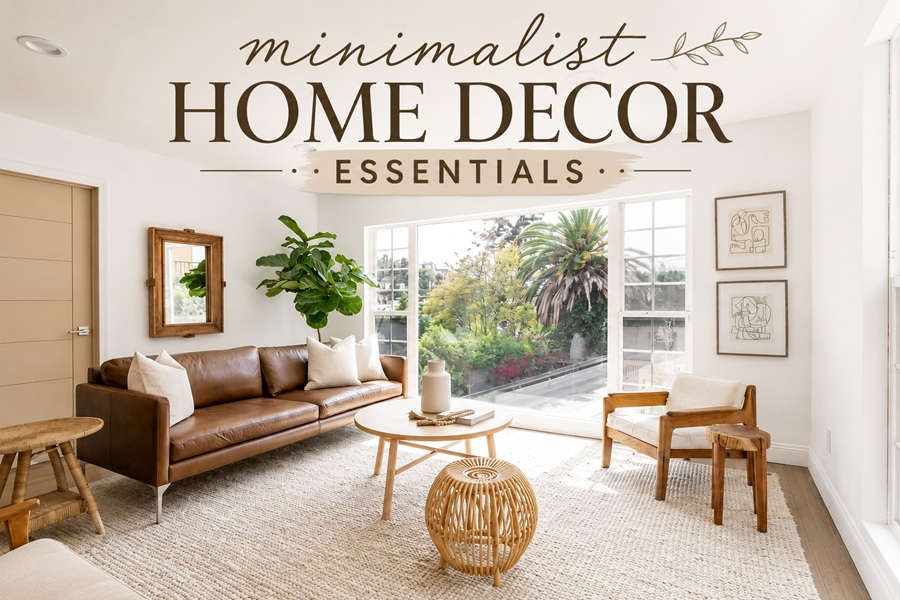
Minimalist home decor is not about empty rooms or cold, sterile spaces. It is about intention. Every object that earns a place in a minimalist home does so because it serves a purpose, brings genuine beauty, or both. The result is a space that feels calm, uncluttered, and quietly elegant, where the things you own support the life you actually live rather than crowding it out.
If you are drawn to the minimalist aesthetic but unsure where to begin, this guide covers the essentials. These are the foundational elements, principles, and pieces that define a well-designed minimalist home, along with the practical decisions that make the difference between a space that feels serene and one that feels bare.
What Defines Minimalist Home Decor?
At its core, minimalism in interior design is built on a single principle: everything in the space should have a reason to be there. The style emerged from a combination of traditional Japanese design, the Scandinavian emphasis on function and warmth, and the mid-century modern movement’s clean lines. What unites these influences is restraint.
A minimalist room is defined by open space, a restrained color palette, clean and simple forms, and a deliberate absence of clutter. Negative space, meaning the empty areas around and between objects, is treated as a design element in its own right rather than something to be filled. The eye is given room to rest. The space breathes.
This does not mean a minimalist home is impersonal. The best minimalist interiors are deeply personal. They simply express that personality through a small number of carefully chosen pieces rather than through accumulation.
The Foundation: A Restrained Color Palette
Color is the first and most important decision in a minimalist space. The classic minimalist palette is built on neutrals, whites, soft grays, warm beiges, taupes, and gentle earth tones, that create a cohesive, calming backdrop.
The goal is not to make everything stark white, which can feel clinical. The most successful minimalist spaces layer several closely related neutral tones to create depth and warmth. A room might combine a warm white on the walls, a soft oatmeal on the sofa, natural oak in the furniture, and a few charcoal accents. The narrow range of tones keeps the space cohesive, while the subtle variation keeps it from feeling flat.
When color is introduced into a minimalist space, it is done deliberately and sparingly. A single piece of art, a stack of books, or a vase of greenery can provide a controlled point of color that draws the eye precisely because the surrounding palette is so restrained.
Essential Furniture: Choose Quality Over Quantity
In a minimalist home, furniture is chosen with care, and there is less of it. Each piece should be functional, well made, and visually quiet. The essentials for most rooms come down to a small number of foundational pieces.
For the living room, a clean-lined sofa in a neutral fabric serves as the anchor. Avoid heavily tufted, ornate, or overstuffed designs in favor of simple, low-profile silhouettes. A single coffee table, ideally with clean geometry and a natural material like wood or stone, completes the core. Storage furniture should conceal rather than display, with closed cabinets keeping daily clutter out of sight.
In the bedroom, a low platform bed embodies the minimalist principle of simple, grounded forms. Pair it with a single nightstand or two, and resist the urge to fill every surface. The bed itself, dressed in quality linens in a neutral tone, becomes the room’s focal point.
The principle that ties all of this together is quality over quantity. Because a minimalist home contains fewer pieces, each one carries more visual weight, which justifies investing in well-made furniture that will last for years rather than filling a room with inexpensive items that will need replacing.
How Do You Add Warmth to a Minimalist Space?
This is the question that separates a beautiful minimalist home from a cold one, and it is the concern most people have about the style. The answer lies in texture and natural materials.
When you remove color and pattern from a room, texture becomes the primary source of visual interest and warmth. A minimalist space layered with natural materials, a chunky wool throw, a linen cushion, a jute rug, a wooden bowl, a ceramic vase, feels rich and inviting despite its restrained palette. The variation in how these surfaces catch light and invite touch does the work that color and pattern do in more maximalist spaces.
Natural materials are central to this. Wood, stone, linen, wool, cotton, rattan, and clay bring an organic warmth that manufactured materials cannot replicate. A room built around these materials will feel grounded and welcoming even with very few objects in it.
Lighting matters enormously as well. Warm, layered lighting, rather than a single overhead fixture, transforms the mood of a minimalist space. Soft pools of light from a floor lamp, a table lamp, and natural light through unobstructed windows create depth and comfort.
Decor Accents: Less, But Better
Decorative objects in a minimalist home are few, but each is chosen with intention. The aim is to curate rather than accumulate.
A few categories of accent reliably work well. Greenery and plants bring life, color, and a connection to nature, with a single statement plant often more effective than several small ones. One meaningful piece of art, given room to be appreciated, anchors a wall far better than a crowded gallery arrangement. Natural objects such as a ceramic vessel, a wooden sculpture, or a stone bowl provide quiet visual interest. A small stack of beautiful books doubles as both decoration and function.
The discipline of minimalist decorating lies in editing. For every object you consider adding, the question is whether it genuinely improves the space. If the answer is uncertain, the minimalist instinct is to leave it out. Empty surfaces are not a problem to be solved in this style. They are part of the design.
Storage and the Art of Concealment
A minimalist home depends on excellent storage, because the uncluttered look is impossible to maintain if daily necessities have nowhere to go. The principle is simple: everything needs a home, and most things should be out of sight.
Closed storage is strongly preferred over open shelving in minimalist design. Built-in cabinetry, storage benches, ottomans with hidden compartments, and furniture that conceals rather than displays all help maintain the clean visual field that defines the style. When open shelving is used, it is styled sparingly, with negative space left intentionally between a small number of carefully arranged objects.
The deeper practice here is decluttering. Minimalist decor and minimalist living are connected. A home with fewer possessions is far easier to keep uncluttered than one packed with belongings that must constantly be managed and hidden. Many people find that adopting a minimalist aesthetic naturally encourages them to reduce what they own.
Is Minimalist Decor Expensive to Achieve?
Not necessarily, though it involves a shift in how you spend. Minimalism can actually save money over time because it discourages the constant accumulation of inexpensive decorative items and trend-driven purchases. Instead of buying many things, you buy fewer things of higher quality.
The upfront investment tends to go into the foundational pieces, a well-made sofa, a solid wood table, quality bedding, because these carry the visual weight of the room and will be used daily for years. The savings come from everything you no longer buy: the accent pieces, the seasonal decor, the impulse purchases that fill maximalist homes. Decluttering what you already own costs nothing and is often the single most impactful step toward a minimalist space.
Room-by-Room Essentials
Living room: A neutral low-profile sofa, a clean-lined coffee table, concealed storage, one statement plant, a single piece of art, and layered warm lighting.
Bedroom: A platform bed in quality neutral linens, one or two simple nightstands, blackout curtains in a natural fabric, and minimal surface decoration.
Kitchen: Clear countertops, concealed small appliances, a single bowl of fruit or a small plant, and open space as the defining feature.
Bathroom: Neutral towels, a few quality toiletries decanted into matching containers, a plant that tolerates humidity, and clear surfaces.
Entryway: A simple bench or console, a single hook or hidden storage for daily items, a mirror, and nothing more than necessary.
Common Minimalist Decorating Mistakes to Avoid
The most frequent mistake is confusing minimalism with emptiness. A minimalist room still needs warmth, texture, and personality. Stripping everything away without layering in natural materials and soft lighting produces a space that feels unfinished rather than serene.
A second common error is choosing everything in pure white, which can read as cold and clinical. Layering warm and varied neutrals creates the depth that makes minimalist spaces feel inviting.
A third is neglecting storage, which makes the uncluttered look impossible to sustain in daily life. And a fourth is treating minimalism as a one-time decorating project rather than an ongoing practice of editing and restraint. The style is maintained through habits as much as through purchases.
Frequently Asked Questions
What colors work best for minimalist decor?
Neutrals are the foundation: warm whites, soft grays, beiges, taupes, and gentle earth tones. Layering several closely related neutral shades creates warmth and depth, while a single controlled accent color can be introduced through art or a plant.
Does minimalist decor work in small spaces?
Yes, exceptionally well. Minimalism makes small spaces feel larger and calmer by reducing visual clutter and emphasizing open space. The restrained palette and concealed storage are especially valuable in compact rooms.
How do I start decorating minimally if I already own a lot?
Begin by decluttering rather than buying. Remove everything from a room, then return only the pieces that are functional or genuinely meaningful. Improving storage so daily items stay out of sight is usually the most impactful next step.