
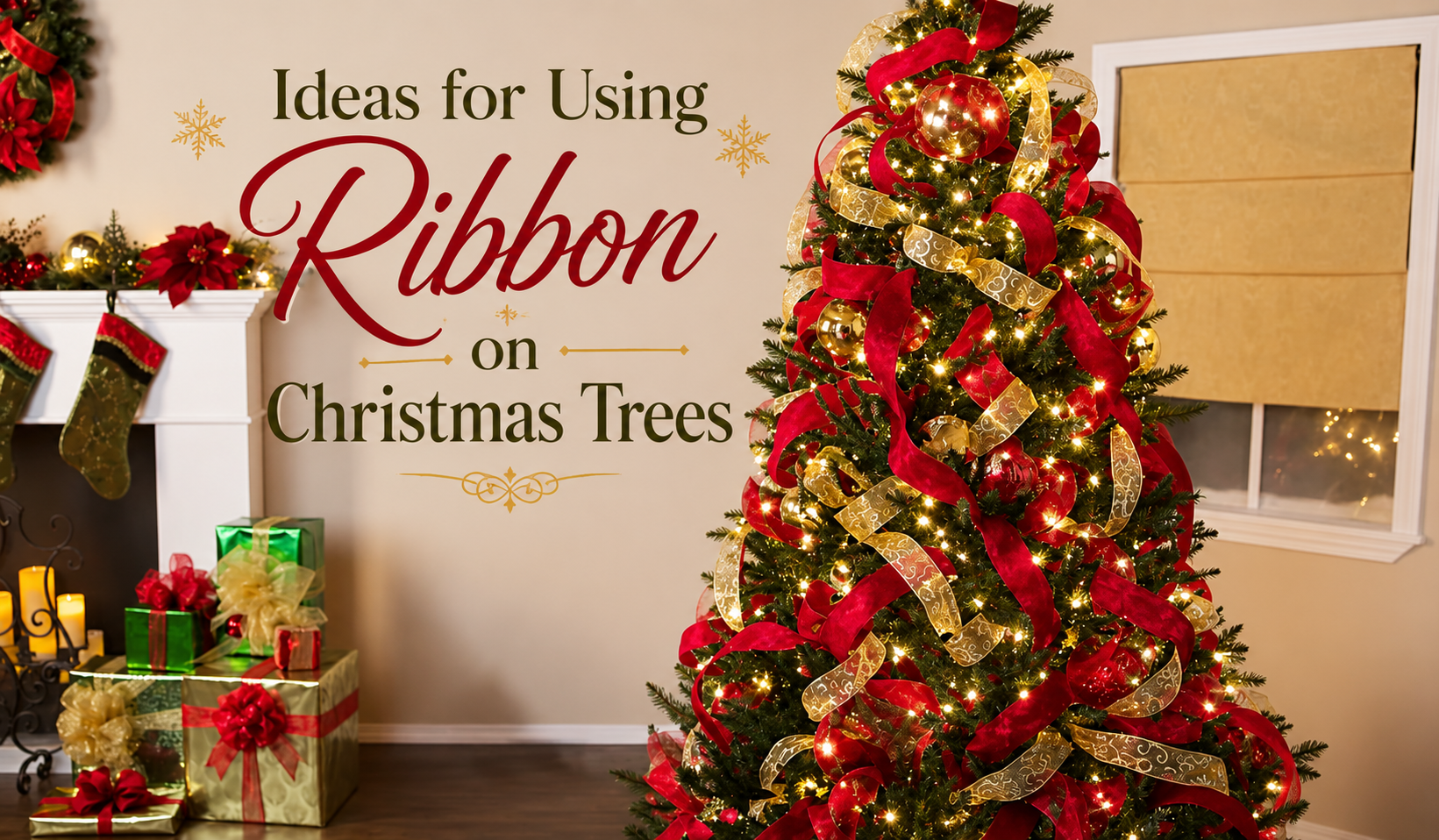
Ribbon is one of the simplest ways to transform a Christmas tree from ordinary to spectacular. A few yards of well-chosen ribbon can add color, texture, movement, and a polished, professional finish that ties an entire tree together. Yet ribbon is also one of the elements people find most intimidating to work with, unsure how to weave it, cascade it, or arrange it without ending up in a tangled mess. The good news is that decorating with ribbon is far easier than it looks once you know a few techniques.
This guide covers the best ideas and methods for using ribbon on Christmas trees, from choosing the right ribbon to the various ways of arranging it, so you can create a beautifully finished tree with confidence.
Why Ribbon Makes Such a Difference
Before getting into techniques, it helps to understand why ribbon has such a powerful effect on a Christmas tree. Ribbon adds several things at once that other decorations cannot, which is why designers rely on it so heavily.
Ribbon introduces color and pattern in a way that fills space and unifies a tree, tying together the ornaments, lights, and other decorations into a cohesive whole. It adds texture and dimension, giving the tree a richer, fuller, more layered appearance. And crucially, ribbon adds movement and flow, drawing the eye up and around the tree and creating the sense of graceful motion that makes professionally decorated trees look so polished.
Perhaps most importantly, ribbon fills gaps and empty spaces beautifully, which is especially useful for trees that are a little sparse. For all these reasons, ribbon is often the finishing touch that elevates a tree from a collection of ornaments to a considered, designer-worthy display.
How Do You Choose the Right Ribbon?
Choosing the right ribbon is the foundation of a beautiful result, and a few considerations make all the difference. The type, width, and quantity of ribbon all affect the final look.
Wired ribbon is the top recommendation for Christmas trees, and for good reason. The thin wire along its edges allows the ribbon to hold its shape, so bows, loops, and cascades stay exactly as you arrange them rather than drooping or flattening. This makes wired ribbon far easier to work with and far more forgiving than unwired ribbon, which is best reserved for simple draping.
Width matters too. Wider ribbon, often around two and a half to four inches, makes a bolder statement and works well on larger trees, while narrower ribbon suits smaller trees or a more delicate look. Many beautifully decorated trees use a mix of ribbon widths for added depth and interest.
For quantity, a good general guideline is to have plenty on hand, since running short partway through is a common frustration. A larger tree can easily use several rolls. When it comes to choosing colors and patterns, selecting ribbon that complements your overall color scheme and ornaments is key, and mixing two or three coordinating ribbons, perhaps a patterned one with a solid or metallic, creates a rich, layered effect.
The Main Ways to Arrange Ribbon on a Tree
There are several distinct techniques for arranging ribbon on a Christmas tree, each creating a different effect. Understanding them lets you choose the look you want or combine methods for a fuller result.
Vertical cascades involve running ribbon from the top of the tree down to the bottom in flowing streams. This creates elegant lines that draw the eye upward and emphasize the tree’s height, and it is one of the simplest methods. Cutting lengths of ribbon and tucking them in to cascade down at intervals around the tree gives a graceful, flowing effect.
Horizontal or spiral wrapping winds ribbon around the tree in a spiral from top to bottom, similar to how lights are strung. This wraps the tree in continuous bands of ribbon and creates a classic, encircling look. It works beautifully with wide ribbon and gives a wrapped, gift-like effect.
Tucked loops and puffs involve creating loops or puffs of ribbon and tucking them into the branches throughout the tree. This is one of the most popular designer techniques, adding wonderful dimension, fullness, and texture. Cutting the ribbon into lengths, forming loops or bunches, and nestling them among the branches creates the lush, layered look seen on many professionally decorated trees, and it is excellent for filling gaps.
Weaving threads the ribbon in and out of the branches, alternately tucking it deep into the tree and pulling it forward to the surface. This creates a natural, integrated look with lovely depth, as the ribbon appears to emerge from within the tree rather than sitting on top of it.
Many of the most beautiful trees combine these techniques, perhaps wrapping or cascading ribbon as a base and then adding tucked loops and puffs for extra dimension.
A Simple Step-by-Step Approach
For those who want a straightforward method to follow, here is a reliable approach to ribbon decorating that produces lovely results.
Begin after the lights and garland are on the tree but before, or alongside, the ornaments. Working from the top down is generally easiest. If you are cascading or wrapping, start by securing the ribbon near the top of the tree, tucking the end firmly into the branches or attaching it around a sturdy branch. Then work your way down, either letting the ribbon cascade in vertical streams, wrapping it in a spiral, or weaving it in and out of the branches.
For the tucked loop method, cut the ribbon into lengths of a foot or two, pinch each into a loop or puff, and tuck it into the branches, distributing the loops evenly around and down the tree. Wired ribbon will hold these shapes beautifully. Step back frequently to check the balance and distribution, adjusting as you go so the ribbon is spread evenly and looks intentional.
Finish by fluffing and shaping the ribbon, using the wire to create graceful curves and folds. Then add your ornaments, which will nestle among the ribbon and complete the layered, finished look.
Ribbon Ideas for Different Tree Styles
Ribbon can be adapted to suit any decorating theme, and matching your ribbon choices to your overall style creates a cohesive result.
For a classic, traditional tree, rich red, gold, or tartan and plaid ribbons in wide widths create a warm, timeless look. For an elegant, glamorous tree, metallic gold, silver, or velvet ribbons add luxury and shine. For a rustic or farmhouse tree, burlap, gingham, buffalo check, and natural-toned ribbons suit the cozy, homespun aesthetic beautifully. For a whimsical or playful tree, brightly colored, patterned, or novelty ribbons add fun and character, which is especially lovely for a children’s or family tree.
For a modern, minimalist tree, a single ribbon in a clean solid color or simple pattern, used sparingly, maintains a sophisticated, uncluttered look. And for a coordinated, designer-style tree, choosing two or three ribbons that tie into a specific color scheme and layering them creates the rich, cohesive effect seen in professionally styled displays.
A Few Helpful Tips
A handful of practical tips make ribbon decorating easier and more successful. Using wired ribbon wherever possible makes everything simpler, since it holds its shape. Having more ribbon than you think you need prevents the frustration of running short. Distributing the ribbon evenly around the whole tree, rather than concentrating it on the front, creates a balanced, finished look from every angle.
Do not be afraid to tuck ribbon deep into the tree in places and pull it forward in others, as this depth is what creates a natural, dimensional effect rather than a flat one. And stepping back often to view the tree as a whole helps ensure the ribbon looks balanced and intentional. Above all, ribbon is forgiving, especially the wired kind, so it can be adjusted, reshaped, and repositioned until it looks just right.
Frequently Asked Questions
What kind of ribbon is best for a Christmas tree?
Wired ribbon is the best choice because the wire along its edges lets it hold its shape, so bows, loops, and cascades stay in place. It is far easier to work with and more forgiving than unwired ribbon, which is better suited to simple draping.
How much ribbon do I need for a Christmas tree?
It depends on the tree size and technique, but it is wise to have plenty on hand, as running short is a common frustration. A larger tree can easily use several rolls, particularly when using fuller techniques like tucked loops or spiral wrapping.
Do you put ribbon on the tree before or after the ornaments?
Ribbon generally goes on after the lights and garland but before or alongside the ornaments. This lets the ornaments nestle among the ribbon for a layered, finished look, and allows you to fill any gaps with ribbon before adding the final decorations.