

Modern farmhouse is one of the most popular interior design styles of the past decade, and its appeal is easy to understand. It takes the warmth, comfort, and honest materials of traditional country living and pairs them with the clean lines and uncluttered simplicity of contemporary design. The result is a home that feels both current and timeless, sophisticated yet genuinely welcoming.
If you are drawn to the look but want to understand how to get it right rather than ending up with a collection of clichés, this guide covers what modern farmhouse interior design actually is, the elements that define it, and how to bring the style into your home in a way that feels authentic and intentional.
What Is Modern Farmhouse Interior Design?
Modern farmhouse is a design style that blends the rustic, practical charm of traditional farmhouse interiors with the sleek simplicity of modern design. It keeps the cozy, lived-in warmth people associate with country homes, natural wood, comfortable textiles, and a sense of ease, while stripping away the fussiness and clutter that older country styles could fall into.
The style rose to prominence in the 2010s and has proven remarkably durable because it resolves a tension many people feel. It offers the comfort and character of a traditional home without the heaviness, and the clean simplicity of modern design without the coldness. That balance between warmth and restraint is the essence of the entire look.
At its core, modern farmhouse is defined by a neutral color palette, natural materials, a mix of rustic and refined elements, and an emphasis on comfort and function. It is a style built for real living rather than for show.
The Defining Elements of Modern Farmhouse
Several characteristics consistently define modern farmhouse interiors, and understanding them is the key to decorating in the style successfully.
A neutral, light color palette forms the foundation. Whites, creams, soft grays, and warm beiges dominate, creating a bright, airy, and calming backdrop. This restraint is what gives the modern version its clean, contemporary feel compared to older, darker country styles.
Natural materials are essential. Wood in particular is everywhere, from exposed beams and hardwood floors to farmhouse tables and open shelving. These are complemented by other natural and honest materials like stone, metal, and woven textures that bring authenticity and warmth.
A mix of rustic and refined creates the signature contrast. A reclaimed wood dining table paired with sleek modern chairs, or rough-hewn beams against crisp white walls, produces the balance of old and new that defines the style. Neither element dominates; the tension between them is the point.
Shiplap and paneling are strongly associated with the look. Horizontal wood plank walls, whether authentic or suggested, add texture and architectural interest while reinforcing the farmhouse heritage.
Black accents provide definition. Matte black hardware, window frames, light fixtures, and faucets create crisp contrast against the light palette and lend the style its modern edge.
Comfortable, practical furnishings keep the style grounded. Deep sofas, slipcovered seating, sturdy wood tables, and generous textiles all reflect the emphasis on comfort and everyday livability.
How Do You Get the Farmhouse Look Without It Feeling Like a Cliché?
This is the real challenge of the style, because modern farmhouse became so popular that certain elements have been repeated to the point of feeling generic. Getting it right means being selective rather than checking off every trend.
Restraint is the answer. Rather than filling a home with every recognizable farmhouse signature at once, the most successful interiors choose a few well-executed elements and let them breathe. A single feature wall of shiplap, a genuine reclaimed wood table, or a beautifully chosen set of black fixtures carries more impact than a room crowded with mass-produced signs and slogans.
Authenticity matters more than decoration. The style is rooted in honest, functional materials, so real wood, genuine texture, and quality craftsmanship read as far more convincing than manufactured imitations of them. Choosing fewer, better pieces keeps the look feeling grounded rather than themed.
Balancing old and new is what keeps a farmhouse interior modern. If everything leans rustic, the room drifts toward traditional country. If everything leans sleek, it loses the warmth. Holding the two in tension, a rustic element answered by a clean one, is the discipline that keeps the style feeling current and intentional.
Color and Materials in Modern Farmhouse
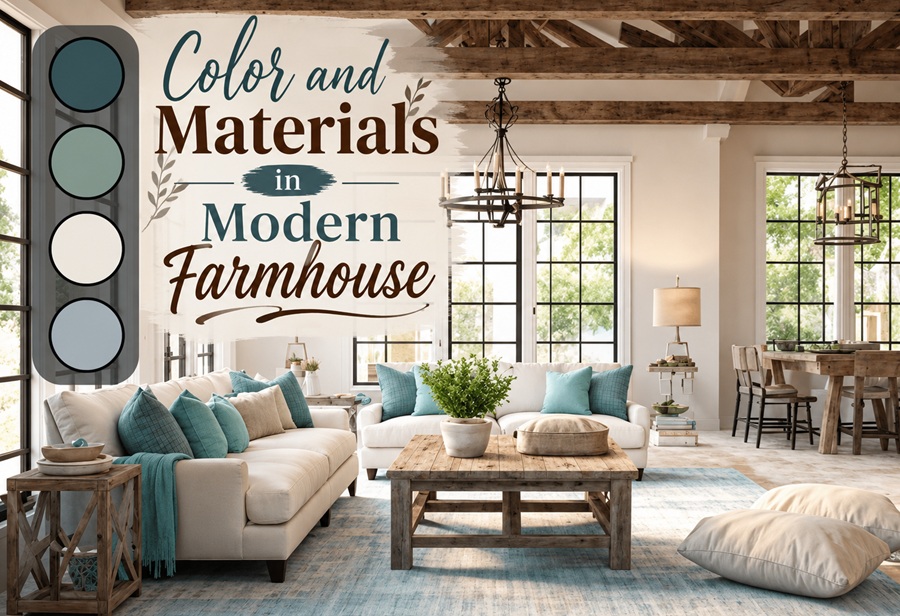
The modern farmhouse palette is built on warm neutrals. Crisp whites and soft creams are the foundation, layered with warm grays, greiges, and gentle earth tones to add depth and prevent the space from feeling stark. This light base is what distinguishes the modern version from older, darker farmhouse styles.
Against this neutral backdrop, the style draws its contrast from black accents and natural wood tones. Matte black hardware and fixtures provide crisp definition, while warm wood in floors, beams, furniture, and shelving brings the essential farmhouse warmth. When color is introduced, it tends to be muted and drawn from nature, sage green, soft blue, and warm terracotta being popular choices, used sparingly as accents.
In materials, the emphasis is on the natural and the honest. Wood dominates, complemented by stone, particularly in kitchens and fireplaces, along with metal accents, ceramic, and an abundance of natural textiles like linen, cotton, wool, and jute. Layering these textures is what gives modern farmhouse interiors their rich, tactile warmth despite the restrained color scheme.
Room-by-Room Modern Farmhouse
Kitchen: The heart of the modern farmhouse home. Shaker-style cabinetry, a farmhouse apron-front sink, open wood shelving, a large central island, black or brushed hardware, and natural stone or butcher block countertops.
Living room: A comfortable neutral sofa, a reclaimed wood coffee table, exposed beams or a shiplap accent, layered natural textiles, and a mix of rustic and modern pieces balanced against one another.
Dining room: A substantial farmhouse table as the anchor, paired with simple modern or mismatched chairs, a statement light fixture in black metal or natural material, and understated decor.
Bedroom: A wood or upholstered bed frame, crisp white linens layered with textured throws, simple bedside tables, and a calm, uncluttered palette that emphasizes rest.
Bathroom: White subway tile, black fixtures and hardware, natural wood vanity, and simple, functional accessories that keep the space bright and clean.
Bringing in Warmth and Character
The soul of modern farmhouse lies in the details that make a house feel genuinely lived in. Layered textiles are central, chunky knit throws, linen cushions, natural fiber rugs, and generous bedding all contribute the softness and comfort the style is known for.
Vintage and antique touches add authenticity and character that new items cannot replicate. A weathered piece of furniture, an antique mirror, a vintage crock, or a piece of salvaged architectural detail grounds the space in a sense of history. Greenery brings life, with simple arrangements of eucalyptus, potted herbs, or a single large plant reinforcing the connection to nature.
Functional objects displayed openly, wooden cutting boards, ceramic pitchers, woven baskets, reflect the farmhouse value that useful things can also be beautiful. This is a style where practicality and charm are not in conflict but are two sides of the same idea.
Is Modern Farmhouse Still in Style?
Modern farmhouse remains widely popular, though the style has evolved as it has matured. The heavily themed, sign-and-slogan version that saturated the market has given way to a more refined, restrained interpretation that emphasizes quality materials, subtle contrast, and genuine craftsmanship over obvious signifiers.
This evolution has actually strengthened the style’s staying power. By shedding the clichés and leaning into its core strengths, honest materials, warm neutrals, comfort, and the balance of old and new, modern farmhouse has settled into a mature, timeless look rather than a passing trend. The fundamentals it is built on, warmth, function, and understated character, do not date the way more decorative fashions do.
Frequently Asked Questions
What colors define modern farmhouse interior design?
A light, neutral palette of whites, creams, soft grays, and warm beiges forms the foundation, with black accents for contrast and natural wood tones for warmth. Muted, nature-drawn colors like sage green and soft blue are used sparingly as accents.
What is the difference between farmhouse and modern farmhouse?
Traditional farmhouse leans rustic, cozy, and sometimes darker or more ornate. Modern farmhouse keeps the warmth and natural materials but pairs them with a lighter palette, cleaner lines, and contemporary simplicity, removing the fussiness for a fresher, current look.
How do I make modern farmhouse feel authentic rather than generic?
Choose a few well-executed elements rather than every farmhouse cliché at once, prioritize genuine natural materials over mass-produced imitations, and hold rustic and modern elements in deliberate balance. Restraint and authenticity are what keep the style feeling intentional