
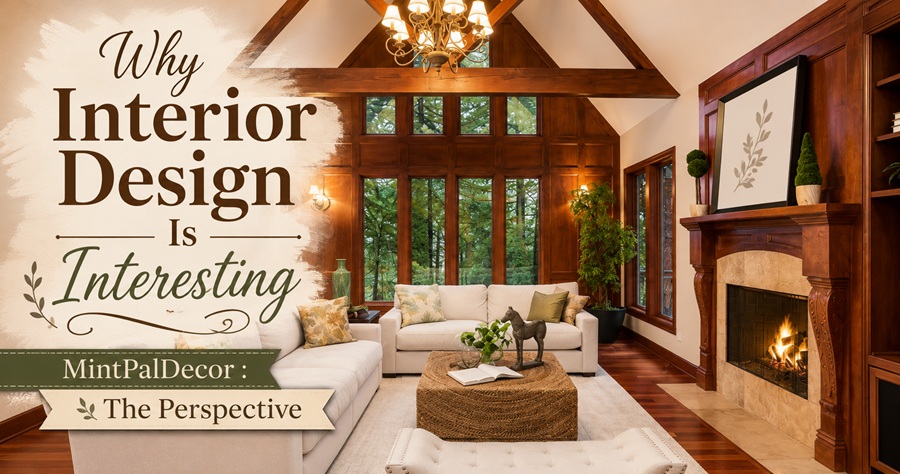
Interior design is one of those subjects that quietly fascinates almost everyone, even people who would never call themselves designers. We all respond to the spaces we walk into. A room can make us feel calm or tense, welcome or out of place, energized or at ease, often before we have consciously registered why. That invisible power over how we feel and behave is exactly what makes interior design so genuinely interesting, and it is the idea at the heart of the MintPalDecor approach to thinking about our homes.
This is an exploration of why interior design captivates so many people, why it is far more than choosing paint colors and furniture, and why understanding it changes the way you see every space you enter.
It Shapes How We Feel Without Us Noticing
The most fascinating thing about interior design is how much it influences us beneath conscious awareness. Color, light, proportion, texture, and layout all send signals to the brain that shape our mood and behavior long before we form an opinion about a room.
A space with warm light, soft textures, and comfortable proportions puts us at ease. A cluttered, harshly lit, poorly organized room creates low-grade stress we may not even be able to name. The same square footage can feel expansive or claustrophobic depending entirely on how it is designed. This is the quiet magic that draws people to the subject: interior design is applied psychology as much as it is aesthetics, and once you understand that, you start noticing its effects everywhere.
The MintPalDecor way of looking at interiors begins from exactly this point, that a well-designed space is not just something to look at but something that actively improves how you live and feel within it.
Why Is Interior Design More Than Just Decoration?
Many people assume interior design is simply about making rooms look attractive, but that is only the visible surface of a much deeper discipline. Good design is fundamentally about solving problems and improving how a space functions for the people who use it.
A skilled approach to interior design considers how people move through a space, where natural light falls at different times of day, how to store what needs storing without creating clutter, how to make a small space feel larger or a large space feel intimate, and how to balance beauty with the practical demands of daily life. Decoration is the final layer applied on top of all of that thinking, not the whole of it.
This is why interior design rewards curiosity. The more you understand about how a space actually works, about flow, function, light, and proportion, the more interesting the whole subject becomes, because you begin to see the invisible decisions behind rooms that simply feel right.
Every Space Tells a Story
One of the most engaging aspects of interior design is that every well-designed space expresses something about the people who inhabit it. A home is not a showroom. It is a reflection of character, history, taste, and the way a person or family actually lives.
The objects we choose to display, the colors we surround ourselves with, the balance we strike between order and comfort, all of these tell a story. Part of what makes interior design so interesting is this personal dimension. Two people given the identical room and budget will produce completely different spaces, each authentic to who they are. Design is a form of self-expression as much as a practical craft, and the MintPalDecor perspective treats that personal storytelling as one of the most rewarding parts of decorating a home.
It Blends Creativity With Practical Problem-Solving
Interior design occupies a rare and appealing middle ground between art and function. It demands creativity, an eye for color, proportion, and beauty, but it also requires practical, almost analytical thinking about how a space must perform in real life.
This blend is a large part of the fascination. A designer, or an interested homeowner, gets to exercise both sides of the brain at once, imagining a beautiful outcome while solving concrete problems of layout, storage, budget, and daily use. Few pursuits combine aesthetic pleasure and practical problem-solving so completely. That is why so many people find they cannot stop thinking about their spaces once they start, there is always another problem to solve elegantly, another improvement to imagine.
Why Does Interior Design Never Feel Finished?
Part of what keeps interior design endlessly interesting is that a home is never truly complete. Our lives change, our tastes evolve, and the needs of a space shift over time. A room that suited a household perfectly a few years ago may need to adapt as circumstances change.
Rather than being a frustration, this is part of the appeal. A home is a living thing that grows and changes alongside the people in it. There is always room to refine, refresh, and reimagine, whether that means a small seasonal update, a rearrangement that improves how a room flows, or a more significant transformation. The MintPalDecor view embraces this, treating the home as an ongoing creative project rather than a one-time decorating task to be checked off and forgotten.
This is also why the subject stays engaging over a lifetime. You never run out of things to learn, notice, or improve.
It Connects Us to History, Culture, and Craft
Interior design is also a doorway into history and culture, which adds a rich intellectual dimension to what might otherwise seem like a purely practical subject. Every design style carries a story, mid-century modern reflecting postwar optimism and new manufacturing, farmhouse style rooted in rural practicality, minimalism drawing on Japanese and Scandinavian philosophy.
Learning about design inevitably means learning about the eras, cultures, and craftsmanship that produced these styles. It connects us to the makers who created the objects we live with and to the traditions that shaped how homes have been arranged for centuries. This depth is part of why interior design rewards genuine interest. Scratch the surface of any style and you find history, philosophy, and human ingenuity underneath.
Understanding Design Changes How You See the World
Perhaps the most compelling reason interior design is so interesting is that once you begin to understand it, you cannot switch it off. You start noticing why a café feels so comfortable, why a hotel lobby feels grand, why one friend’s home feels instantly welcoming while another feels cold despite being beautifully furnished.
This heightened awareness is genuinely enriching. Spaces that once registered only as background become legible, full of decisions you can now read and appreciate. You begin to understand your own responses to environments and to shape your surroundings more intentionally. This is the deeper value the MintPalDecor perspective points toward, that understanding design does not just help you decorate a room, it changes your relationship with every space you inhabit.
Frequently Asked Questions
Why do people find interior design so fascinating?
Because it shapes how we feel and behave in ways we often do not consciously notice. Interior design combines psychology, creativity, and practical problem-solving, and understanding it changes how you experience every space you enter.
Is interior design just about making rooms look nice?
No. Aesthetics are only the visible surface. Good interior design is fundamentally about how a space functions, how people move through it, how light and storage work, and how to balance beauty with the practical demands of daily living.
Can anyone learn to appreciate interior design?
Absolutely. You do not need to be a professional to develop an eye for design. Simply paying attention to how different spaces make you feel, and why, is enough to start seeing the invisible decisions behind them and to shape your own home more intentionally.