
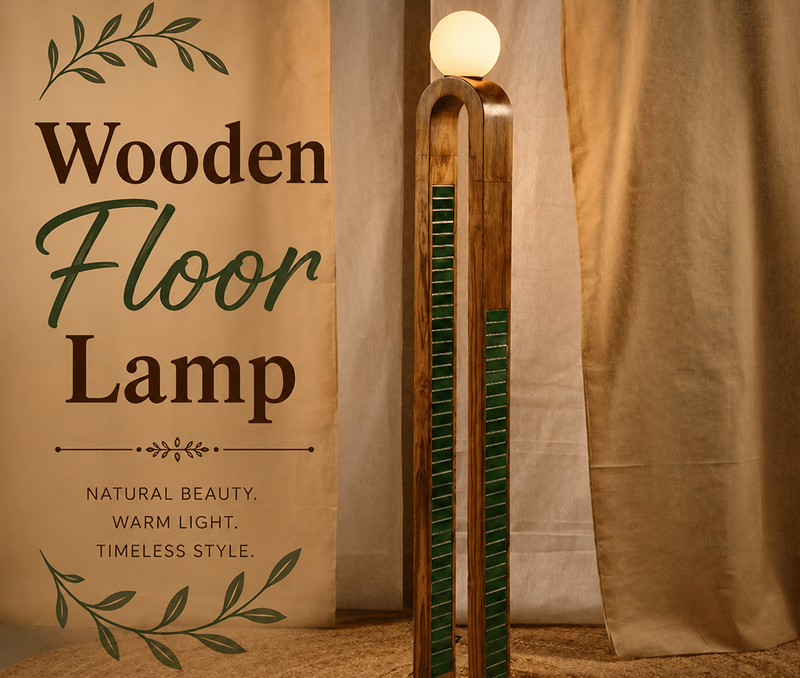
A wooden floor lamp does something a metal or plastic one rarely manages: it looks finished even when the light is off. The grain, the tone, and the weight of real wood give a room a sense of craft that most lamp materials cannot match, which is part of why wood bases keep showing up across nearly every style of interior right now, from Scandinavian and Japandi rooms to farmhouse and traditional spaces. Choosing the right one comes down to a handful of practical decisions rather than luck.
What counts as a wooden floor lamp?
Strictly speaking, a wooden floor lamp has its main body, base, or stem made from solid wood or a wood veneer, rather than wood used only as a small accent on a metal frame. Some lamps blend materials, pairing a turned wood base with a metal stem or a fabric shade, and those still qualify as long as wood is the dominant visual material. Rattan and bamboo lamps are often grouped alongside wooden ones in style guides, but they are technically woven natural fibers rather than solid timber, so it is worth checking the product description if the distinction matters to you.
Why choose a wooden floor lamp over metal or plastic?
Wood brings warmth in a way that most other lamp materials do not. A matte black or brushed metal base can look sharp and modern, but it tends to read as cool and industrial. Wood softens a room instead, which is why it pairs so naturally with earthy palettes, layered textiles, and other natural materials like linen, stone, or wool. It is also more forgiving in a room that mixes several furniture styles, since a neutral wood tone tends to bridge modern and traditional pieces better than a bold metal finish does.
The tradeoff is weight and price. Solid wood bases are usually heavier and pricier than metal or plastic ones, though that extra weight also means a more stable lamp that is less likely to tip.
What wood types and finishes are most common?
Most wooden floor lamps use one of a few wood families:
- Oak and ash, which are lighter in tone and show a visible grain, common in Scandinavian and Japandi styles.
- Walnut, a warmer, darker wood often used in mid century modern and transitional designs.
- Teak and other tropical hardwoods, popular in boho and coastal interiors for their rich color and natural texture.
- Reclaimed or distressed wood, favored in farmhouse and rustic spaces for its worn, lived in character.
Finish matters as much as species. A matte or raw finish emphasizes the natural grain and fits casual, organic rooms, while a lacquered or polished finish looks more formal and works well in traditional or transitional spaces.
What styles of wooden floor lamps are popular right now?
A few silhouettes are especially common in current lighting collections:
- Tripod lamps, which use three angled wood legs for a sculptural, mid century look.
- Arc lamps, which curve overhead to cast light down over a sofa or reading chair without needing a side table.
- Tree or multi head lamps, which branch into several small shades for broader, layered light.
- Torchiere lamps, with a tall, slender wood column that directs light upward for soft ambient glow.
- Swing arm lamps, which let you angle the light directly onto a book or task without moving the whole lamp.
Sculptural, carved wood bases have also been gaining ground as standalone decor pieces that look intentional even when the lamp is switched off.
How do you pick the right size and height?
Floor lamps generally work best when the light source sits close to seated eye level, which tends to fall somewhere between sixty and seventy two inches from the floor to the top of the shade. A lamp that is too short next to a tall sofa will look undersized, while a lamp that is too tall in a room with low ceilings can make the space feel cramped. As a rough guide, place a reading lamp about thirty inches to the side of the chair or sofa arm it needs to light, close enough to be useful without crowding the seating.
What lampshade and light color work best with a wood base?
Linen and fabric drum shades diffuse light softly and pair naturally with wood tones, since both materials share a similar warmth. Paper shades give an even gentler, glowing effect that works well in bedrooms or reading corners. For the bulb itself, a warm color temperature, generally in the twenty seven hundred to three thousand kelvin range, complements wood far better than a cool white bulb, which can make warm wood tones look slightly flat. A dimmable bulb or built in dimmer adds flexibility for switching between task lighting and a softer evening glow.
How do you match a wooden floor lamp to your existing furniture?
The easiest approach is to work with undertones rather than trying to match the wood exactly. Warm wood tones such as oak or teak generally pair well with other warm woods, while a cooler, grayer wood works better alongside furniture with cooler undertones. If your furniture already mixes several wood tones, a slightly darker or lighter lamp base than everything else in the room actually reads as more intentional than trying to match one piece exactly. Pulling the lamp’s finish or shade color from an existing accent, such as a rug or a set of pillows, also helps tie the room together without everything looking too matched.
How do you care for a wooden floor lamp?
Solid wood needs a bit more attention than metal or plastic. Dust it regularly with a soft, dry cloth, and avoid placing it in direct sunlight or right next to a heating vent, since both can dry out and fade the wood over time. Keep it away from damp areas like a bathroom or an uncovered porch, since moisture can warp or discolor untreated wood. An occasional light coat of furniture polish or wood conditioner, once or twice a year, keeps a solid wood base looking fresh without needing to refinish it.
Where does a wooden floor lamp work best in a home?
Living rooms and reading corners are the most common spots, especially next to a sofa or armchair where the lamp can double as both ambient and task lighting. Bedrooms benefit from a wood floor lamp beside the bed as a softer alternative to overhead lighting, and entryways can use a taller wood lamp to add warmth and height to an otherwise empty corner. Wherever it goes, a wooden floor lamp tends to work best as part of a layered lighting plan rather than the only light source in the room, paired with a ceiling fixture or a table lamp so the space does not rely on one single source of light.
Final thoughts
A wooden floor lamp is one of the few furniture pieces that pulls double duty as both function and decor, adding warmth to a room whether it is switched on or off. Focus on getting the wood tone, size, and shade right for your space, and the lamp will hold up as a piece worth keeping long after any specific trend has moved on.